 CrazyGamesX.com
Jetski Games
Water-based racing simulations typically involve piloting a personal watercraft across open bodies of water. The genre focuses on high-speed traversal and navigating environmental hazards using precise steering and acceleration inputs.






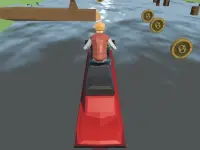


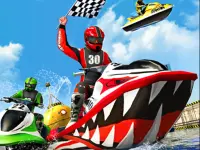













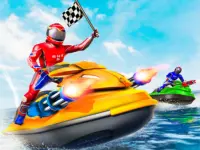
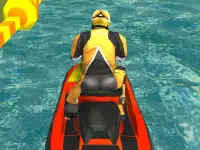
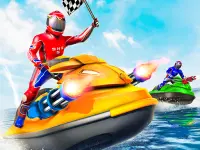




Players engage in time trials or competitive events, requiring mastery of momentum and cornering to succeed in these jetski racing games.
Entry Guide: jetski games
Efficiently control the watercraft by steering to avoid obstacles and using acceleration to maintain speed; players must navigate buoys and complete laps to finish the event.
System Mechanics
Physics engines simulate buoyancy and hydrodynamics, allowing the watercraft to jump waves and cut through chop. Standard objectives involve racing against opponents or beating a set time limit. Control schemes typically map forward motion and turning to directional inputs or tilt sensors. Environmental factors like currents and wind affect handling and top speed during the session.
Optimization Rules
Players should maintain a straight line through chop to conserve momentum and avoid stalling. Use acceleration sparingly on turns to prevent sliding out and losing control. Observe opponent patterns to find the optimal racing line across the water surface. Mastery of these techniques is essential for multiplayer water sport games.
Core Inquiries
Q: What controls are typically used? A: Directional inputs and acceleration are standard for piloting the watercraft.
Q: What is the primary objective? A: The goal is to complete laps or finish a course faster than opponents.
Q: Is there a stated specific story? A: The genre generally focuses on racing mechanics rather than narrative.
Q: What defines the core mechanic? A: Physics-based navigation and speed management are the core gameplay elements.