 CrazyGamesX.com
Hex Games
Hex games operate on a grid of interlocking hexagonal tiles, demanding spatial reasoning for strategic placement. Players manipulate these six-sided cells to form patterns, achieve adjacency goals, or dominate territory within a structured environment.






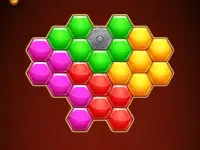






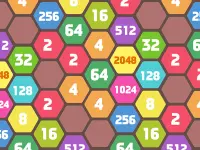













This category of hex strategy games requires precise calculation of angles and connectivity to succeed.
Entry Guide: hex games
Efficiently manipulate the hexagonal grid to align shapes and achieve the objective; use direct input to place and rotate tiles.
System Mechanics
The core loop involves placing units or tiles onto specific hexes to control area or connect nodes. Adjacency rules dictate valid moves, often requiring players to match colors or types across shared edges. Resource management systems may limit actions per turn, forcing careful allocation of available moves. These hex puzzle games rely on deterministic outcomes based on geometric alignment.
Optimization Rules
Focus on securing central hexes early to maximize movement options across the board. Maintain awareness of opponent positions to block potential expansions effectively. Prioritize actions that satisfy multiple objectives simultaneously to conserve moves. Study hex board games to learn common opening patterns.
Core Inquiries
Q: What are the primary controls in hex games? A: Controls typically involve selecting and placing tiles on the grid.
Q: What is the standard objective? A: The objective is usually to control territory or match specific tile patterns.
Q: Is there a stated narrative? A: No specific story or characters are defined for the genre.
Q: What defines the main mechanic? A: The mechanic is manipulating hexagonal tiles on a grid-based field.