 CrazyGamesX.com
Fish Eat Getting Big Games
In the fish eat getting big games genre, players typically control a small aquatic creature in a two-dimensional underwater environment where growth is the primary objective.
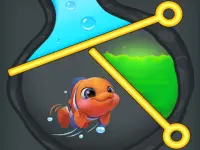


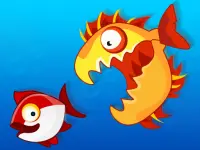
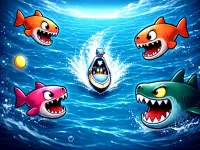





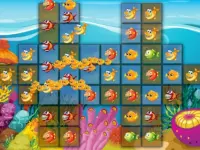


The core loop involves consuming smaller organisms while actively avoiding larger predators that pose an immediate threat to survival. These fish eat games require constant spatial awareness and strategic positioning within the aquatic food chain hierarchy.
Entry Guide: fish eat getting big games
The player must navigate the environment using directional input to locate and consume edible biomass; big games provide a clear path for progression through size accumulation.
System Mechanics
Standard mechanics include a growth meter that increases upon successful consumption of smaller entities, directly correlating size with combat effectiveness and survivability. Player collision detection determines interaction outcomes, where smaller targets are absorbed and larger targets inflict damage or reset progress. Environmental boundaries confine movement to a specific play area, often featuring dynamic currents or obstacles that influence trajectory. The evolution games loop relies on a risk-reward assessment of predator avoidance versus prey pursuit to maximize growth efficiency.
Optimization Rules
Players should Maintain a balance between aggressive hunting and passive evasion to ensure steady progress without unnecessary exposure to hazards. Prioritize consuming the most abundant low-risk targets to build mass before engaging in confrontations with marginally larger opponents. Use the environment's visual cues to predict the movement patterns of other entities, allowing for efficient interception or avoidance.
Core Inquiries
Q: What are the primary controls? A: Directional movement input is used to navigate the aquatic space and position the creature.
Q: What is the main objective? A: The objective is to grow larger by consuming smaller organisms and surviving threats.
Q: Is there a specific growth mechanic? A: Yes, consuming biomass increases the creature's size and power.
Q: How does interaction work? A: Interaction is based on size comparison, where smaller entities are consumed and larger ones are avoided.