 CrazyGamesX.com
Brainstorm Games
Brainstorm games is a collection for browsing separate games, rather than the title of one shared word competition. Its current listings include Brainstorming and Cool Math Games For Kids alongside other kinds of games.



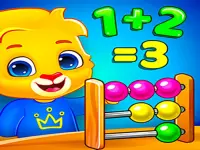


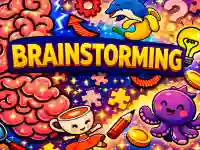
Those two examples offer a useful starting choice: interactive riddles when you want to question an assumption, or number activities when you want to practise counting and arithmetic. Read each game’s own instructions before expecting a timer, scoring system or control scheme.
Start with interactive riddles
Brainstorming asks you to work through unconventional puzzles by interacting with the objects on screen. Its published instructions identify tapping or clicking, dragging objects and, in some tasks, tapping in several places at once. The wording can be part of the challenge, so begin by reading the whole question rather than immediately selecting the most noticeable object.
Separate what the instruction actually says from what you think it should mean. A familiar image can encourage a familiar answer, but that interpretation may introduce a rule that the task never gave you. If an obvious attempt fails, reread the prompt and consider a different relationship between the objects. Treat each interpretation as an idea to test, rather than a fact you must keep defending.
Try one relevant experiment at a time. Moving an object, selecting a detail or combining two items should answer a question about the scene. Notice what changed after the action before making another. Repeated tapping without observation can make it difficult to understand which input mattered, while a deliberate sequence gives each attempt a clear purpose.
Choose number practice for a different challenge
Cool Math Games For Kids is a separate educational title. Its description identifies four modes involving number recognition, counting, addition and subtraction, with mouse click or tap input. It is a more specific choice when the aim is to work with quantities rather than search for an unexpected interpretation of a picture.
When counting, follow a consistent order and match one number to each object. For addition, identify the two quantities being brought together. For subtraction, identify the starting quantity and what is removed. These are practical strategies for the described activities; they are not claims that the game includes extra counting tools, hints or a particular visual layout.
If an answer is wrong, identify the step that caused the problem. Misreading a numeral, skipping an object and choosing the wrong operation require different corrections. A short session with one clear aim can be more useful than a long sequence of guesses. Accuracy and understanding are reasonable goals without assuming an unverified leaderboard or countdown.
Use the collection as a starting point
The current browsing page mixes these thinking games with titles from other styles. A listing under this label does not mean that every game uses riddles or maths. Check the individual title, its loaded screen and its instructions when choosing what to play. A driving game or a different mini-game collection should not be approached as though it shares Brainstorming’s interaction rules.
Your preferred kind of effort can guide the choice. Pick a riddle when you enjoy examining assumptions and trying a small number of thoughtful experiments. Pick number practice when you want a task with an arithmetic relationship you can explain. If you want something else from the current list, let that game’s own objective determine the approach.
Make your next attempt more useful
Before restarting a difficult task, describe what you already know. In a riddle, that might be which object can move and which interpretation failed. In a number exercise, it might be the quantity you counted or the operation you need. This makes the next action a response to evidence instead of another unrelated guess.
For a longer comparison of the two approaches, read the brainstorm games guide to riddles and number puzzles. It explains a method for reading prompts, testing ideas and reviewing mistakes. The aim is to help you choose and understand a game, without promising educational outcomes or features that have not been established for the actual title.