 CrazyGamesX.com
2048 Games
The 2048 collection brings together games built around a clear numerical relationship: equal values combine to create a larger value, usually by doubling.









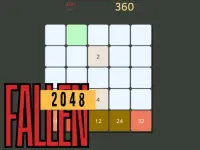


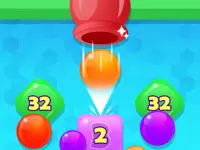

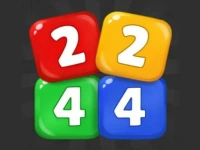

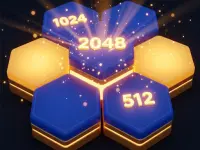


That simple rule can support very different styles of play. Some entries present a board that rewards long-term space management, while others add movement, lanes, falling pieces, or a runner course. The collection is therefore useful for players who enjoy number puzzles but do not want every session to feel identical.
Jelly Run 2048 is a representative action-puzzle option. It asks you to guide a jelly block left and right, connect or disconnect cubes, and collide with equal numbers so they merge into a higher value. Forward motion makes timing and lane choice as important as arithmetic. You need to identify the match you want before it reaches you, then leave yourself a safe exit after contact.
How to choose a 2048 game
Start by deciding whether you want time to plan or pressure to react. A board-focused version suits players who like to examine several future combinations. A moving version suits players who prefer quick decisions and visible momentum. Neither format is automatically easier. A calm board can punish poor long-term organization, while a runner can punish late input even when you understand the numbers correctly.
Also check the control method. Keyboard, mouse, swipe, and tap controls create different rhythms. On a touch device, leave enough screen visible to read upcoming values. On a computer, use measured pointer movements and avoid unnecessary repeated input. The best choice is the format whose controls let you see and act consistently.
The merging sequence
The useful mental model is a chain of equal pairs. Two matching values form the next value, and two of that new value can form another. Reaching 2048 therefore depends on preserving opportunities at several levels. A high tile has little value if the board or route no longer offers a compatible partner. Lower-value pieces are not clutter when they are arranged to support the next step.
Before every move, identify the exact pair you are building. Avoid collecting or shifting a piece merely because it is available. In a fixed board, protect open space and avoid scattering high values. In a moving course, choose a lane early and check what happens immediately after the merge. The format changes, but the principle remains: a good move creates another useful move.
Practical advice for better sessions
Use short practice goals instead of measuring every attempt only by the final number. Try to create several consecutive clean merges, keep one safe area available, or complete a section without an emergency correction. These goals reveal whether you need better visual scanning, steadier control, or stronger number planning.
When an attempt ends, identify one cause. Did you combine the wrong values, run out of room, move too late, or fail to notice the next pair? Change one behavior on the next run. This is more effective than restarting immediately with the same habits.
If a fast 2048 runner feels overwhelming, take a break with a different puzzle such as Woodoku Block Puzzle. It does not use the same doubling objective, but its four selectable modes provide another way to practice deliberate visual decisions. When you return, the contrast can make rushed movements easier to notice.
Why the collection is broader than one board
2048 has become a flexible design idea rather than a single presentation. The recognizable part is the progression created by matching equals. Developers can place that relationship inside a grid, a drop system, a runner, or another spatial challenge. For players, that means the collection can serve both quiet puzzle sessions and more active ones without abandoning the core satisfaction of building a larger number from small pieces.
For a complete explanation of lane planning, controlled swipes, connection choices, and recovery in the featured runner, use the Jelly Run 2048 guide. Whichever game you select, focus on the next compatible pair, preserve room for the move after it, and treat 2048 as the result of many orderly decisions rather than one lucky action.