 CrazyGamesX.com
Mahjong Connect Full Guide: How to Play, Tips, and More
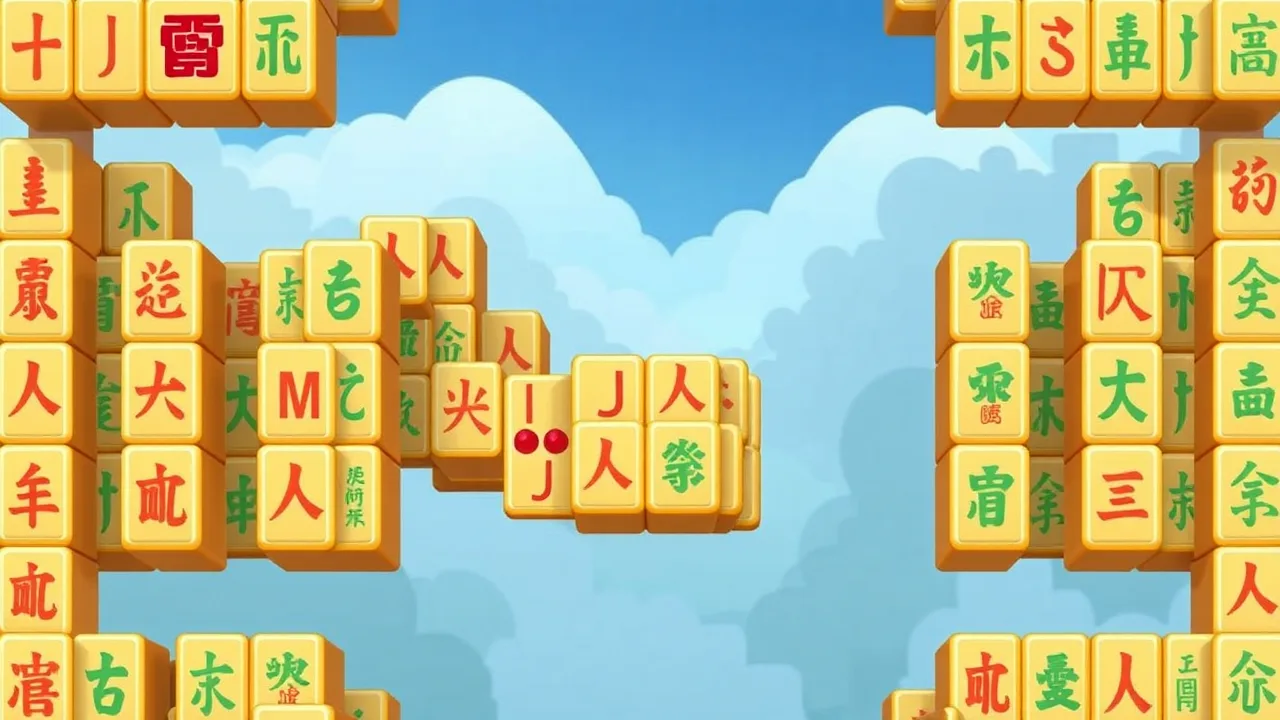
Few puzzle games hit that perfect balance of calm focus and “just one more board” like mahjong connect. It looks serene—beautiful tiles, pleasant sound cues, an uncluttered grid—but behind the minimalism is a sharp logic challenge: spot matching pairs that can be linked by a clean path before the timer runs dry. The better you get at “seeing” lines and openings, the faster a board melts away. And if you’ve ever reached the final seconds with three pairs left and a heartbeat in your ears, you already know why players love this format.
Play mahjong connect now on https://www.crazygamesx.com by clicking here: mahjong connect.
In this definitive guide you’ll learn how the connection rules work (including the crucial turn limits), how to open the board efficiently, how to avoid deadlocks, and how to build habits that make your solves feel effortless. We’ll move from essential fundamentals to advanced route planning, score/speed strategies, and endurance tactics for long sessions. Finish with a quick FAQ you can keep beside the game for fast reference.
2) What is mahjong connect? 📖
Mahjong connect (often associated with the “linking” variant of classic mahjong solitaire) is a tile-matching puzzle where you remove pairs of identical tiles only if they can be connected by a path that doesn’t pass through other tiles and uses a limited number of turns. The board begins dense; every pair you clear creates new corridors, which in turn reveal more legal links. Your job is to keep the chain of removals flowing before time or moves run out.
Mechanically, it inherits the spirit of tile removal from the well-known solitaire format and blends it with strict pathing logic—as defined by Mahjong solitaire and Browser game.
The short version:
Find pairs → check if a legal connecting line exists → remove → new lanes open → repeat until the board is clear.
3) How to Play mahjong connect 🕹️
This step-by-step guide covers universal rules you’ll encounter in the mahjong connect family of games, including Mahjong Connect Classic.
3.1 The board at a glance
-
Grid of tiles: Typically even rows/columns featuring mahjong symbols (bamboos, characters, winds, seasons, flowers) or themed icons.
-
Borders count as air: Most versions treat the empty space outside the grid as passable path area, which is key to many early clears.
-
Timer / move pressure: Many builds include a timer. Others may give limited hints or shuffle charges.
3.2 The connection rule (the heart of the game)
-
Match identical tiles (same symbol).
-
Draw an imaginary line between them that:
-
Does not cross any other tile, and
-
Uses at most two 90° turns (i.e., the path can be made of up to three straight segments).
-
-
If that line exists, the pair is legal and disappears.
Think of legal paths as corridors. Corridors are made from empty cells on the grid plus the free space beyond the board’s boundary. Tiles on edges are therefore often easier to match.
3.3 Opening moves that matter
-
Scan the perimeter first. Because the outside is “free,” edge pairs often connect easily via the border.
-
Favor pairs that free cross-traffic. Removing tiles that split the board into two open halves creates more corridors than clearing a tiny pocket.
-
Clear congested columns/rows. Densest lanes are your bottlenecks; opening one usually unlocks multiple new links.
3.4 Pace and rhythm
-
Two-pass scan: Make a rapid pass for obvious edge links, then a slower pass for interior “L” and “U” shaped paths.
-
Eyes track the gaps, not the tiles. Your mouse follows the empty corridors; your peripheral vision spots the symbols.
-
Commit and move on. If you’ve stared at one area for 5+ seconds, slide to a different quadrant—fresh angles reveal paths faster.
3.5 When you get stuck
-
Edge-to-edge test: Pick a tile near an edge and see if a border wrap makes a connection to its mate.
-
Pair prioritization: If multiple copies exist (e.g., four identical tiles), connect the pair that opens the most space.
-
Use a shuffle only after an honest scan. Shuffles burn a resource; save them for true gridlocks, not impatience.
3.6 Scoring basics (typical patterns)
-
Speed multipliers: Clearing in quick succession often raises multiplier or bonus bars.
-
Combo windows: Some versions reward consecutive clears without pauses—plan short “runs” of guaranteed links.
-
Penalty for hints/shuffles: Expect score hits or reduced time when you rely on assists.
4) Top Tips & Strategies 💡
Use these layered tips to move from “seeing some paths sometimes” to solving systematically.
4.1 Beginner (foundation you can trust)
-
Anchor the eyes at corners. Corners touch two borders, which means a larger connection envelope. Quick wins live here.
-
Edge sweep → inward spiral. Clear the perimeter, then spiral inward. Corridors grow as you move toward the center.
-
Symbol grouping. Mentally bucket common icons (e.g., bamboo 1–9) so your scan is “find any bamboo” before verifying the exact match.
-
Don’t chase long zigzags. If a path needs three turns, good; if your brain is inventing a fourth, that pair is illegal—move on.
-
Stop over-aiming. You don’t need to trace the entire line in your head—just confirm enough empty space exists for ≤2 turns.
4.2 Intermediate (consistency unlocks)
-
Two-turn map in your head. Imagine three straight rulers you can place: horizontal segment → vertical segment → horizontal segment (or the reverse). If none fits, skip.
-
Opposites attract via the wall. A tile on the left edge can often connect to a mate on the right via a full border wrap—don’t forget this free “highway.”
-
Collapse the chokepoints. The densest row/column near the center is your congestion tax; pay it early and the rest gets cheap.
-
Work in bands. Clear a horizontal band across the grid, then another. This keeps corridors aligned and reduces aimless scanning.
-
Delay identical-quad runs. With four of the same tile, always remove the pair that creates more corridors and leave the pair that’s already easy for later.
4.3 Advanced (speedrunning and no-shuffle clears)
-
Path parity thinking. When two tiles share a row/column with only one obstacle between, a single removal elsewhere can unlock three immediate matches—engineer that removal.
-
Forced corridor creation. Sometimes two tricky pairs become trivial if you first clear a third pair that opens a wraparound lane. Look for “one move to unlock many.”
-
Micro-routing combos. Chain 3–5 fast pairs you’ve pre-spotted. Combos keep timers generous and often feed score multipliers.
-
Deadlock avoidance. If the board has many unique, rare symbols, avoid removing all easy duplicates in one area—leave at least one flexible pair to bridge sections.
-
Time trading. If the mode adds time per clear, blitz easy edge pairs first to extend your clock, then invest that time in decoding the interior.
4.4 Reading tricky patterns (with examples in words)
-
“Doorway” pairs: Two identical tiles sit on opposite sides of a one-cell gap. If that gap opens to the border, it’s usually a legal path with one turn.
-
“C-shape” path: Two tiles offset like knights in chess; if either the inner or outer corridor is empty, you can draw a two-turn “C” to connect.
-
“Pocket match”: A tile trapped by three neighbors can still connect out if one neighbor disappears—plan a nearby clear to free it.
-
“Parallel lanes”: When two tiles line up with a single occupied lane in between, a prior removal that empties that lane instantly legalizes the match.
5) Why mahjong connect Is So Addictive 🔁
Simple rules, deep sight-reading. With only one constraint (≤2 turns), the game shifts all complexity into recognition. Each board is a fresh visual puzzle, and your brain gets faster at parsing it.
Continuous momentum. Every cleared pair increases your options. That rising agency feels great and creates satisfying “cascade” moments.
Tension that respects skill. Timers and limited shuffles add pressure, but nearly every tough position has a clean solution if you keep your route discipline.
Progress you can feel. Week one: you hunt aimlessly. Week two: you unconsciously sweep edges and route corridors. Week three: you’re building 10-pair combos under time. That tangible improvement is catnip to puzzle lovers.
Zen with a pulse. The art, sounds, and pace are calming; the final-seconds sprints are electrifying. That calm-then-clutch rhythm keeps you coming back.
6) How to Master Board Flow (From First Move to Final Pair) 🧠
Think of a full clear as three acts. Practicing each act separately makes whole-board solves feel automatic.
Act I — Extraction (0–25% cleared)
-
Goal: Carve safe corridors along the perimeter.
-
Method: Prioritize edge pairs, especially corners, and any pair whose removal splits a thick cluster.
-
Warning: Don’t spend time proving awkward interior paths yet—extract space first.
Act II — Expansion (25–75% cleared)
-
Goal: Turn your outer lanes into avenues that reach the center.
-
Method: Target the densest row/column; every tile removed there multiplies access. Clear in horizontal or vertical bands to keep order.
-
Warning: Beware of “pretty but pointless” pairs (small clears that don’t open new channels).
Act III — Consolidation (75–100% cleared)
-
Goal: Close with speed and avoid deadlocks.
-
Method: Chain easy pairs quickly to beat the timer; save shuffles for the final stubborn cluster if your mode allows.
-
Warning: Don’t tunnel on a single symbol. If a match isn’t obvious in three seconds, switch symbols or quadrants.
7) Common Mistakes (and Quick Fixes) 🧯
-
Staring at art, not lanes.
Fix: Blur the symbols mentally; trace empty corridors with your eyes first, then verify the icon. -
Forcing illegal lines.
Fix: Repeat the mantra: three segments max. If your imagined route needs a fourth, abandon it instantly. -
Clearing “fun” pairs that open nothing.
Fix: Ask “What does this remove unlock?” If the answer isn’t “a corridor” or “a thick lane,” pick another pair. -
Burning shuffles early.
Fix: Reserve assists for genuine stalemates, not impatience. Do one perimeter pass, one interior pass, then decide. -
Leaving singletons stranded.
Fix: When a symbol has an odd count visible, expect a hidden mate. Avoid removing its only convenient partner until more space appears.
8) Why Play mahjong connect on https://www.crazygamesx.com/? ⚡
You can enjoy mahjong connect almost anywhere, but platform quality matters when you’re pushing for fast, flawless clears. CrazyGamesX ticks the right boxes for puzzle flow:
Instant play, no download
Launch right into a board and start solving—no installers, no account barrier. That frictionless start is perfect for quick practice bursts.
Smooth performance
A steady, responsive board means your eyes can track lanes without micro-stutters. Smooth rendering improves path recognition and reduces fatigue over long sessions.
Works great on desktop and mobile
Whether you prefer pixel-precise mouse clicks or casual touch input on the couch, the interface remains clean and readable—critical for symbol recognition.
Easy discovery of more puzzles
When you want a palate cleanser (e.g., a match-3 or number puzzle), the on-site library keeps you in the same “relax-but-think” lane without leaving the domain.
Jump in now and play mahjong connect on https://www.crazygamesx.com: mahjong connect.
9) Conclusion ✅
mahjong connect takes a single elegant rule—connect identical tiles with a path using at most two turns—and builds a whole world of satisfying boardcraft. Master the edge sweep, think in corridors, practice band clearing, and you’ll feel every puzzle go from noise to structure. When a board finally “clicks” and you chain a dozen pairs in a row, you’ll understand why this format has such staying power.
Keep your scans honest, your shuffles scarce, and your focus on space, not symbols. Do that, and your averages will climb quickly—and solving will feel as relaxing as it is rewarding.
10) FAQ ❓
1) What’s the exact connection rule again?
You can remove a matching pair if a path between them exists that doesn’t cross any tiles and uses no more than two right-angle turns (three straight segments total). The board’s outer border counts as passable space.
2) How do I get faster at spotting legal paths?
Train your eyes to follow empty corridors first. Do a quick edge sweep, then an inward spiral. Build 3–5-pair combos you can execute without thinking to feed the timer.
3) When should I use hints or shuffles?
Only after a full perimeter and interior scan. If a shuffle restores clear corridors or rescues stranded singletons, it’s worth the penalty; otherwise, keep searching.
4) I keep running out of time near the end. Tips?
In Act III, chain easy pairs quickly to bank seconds, then spend short bursts decoding the last cluster. Avoid tunneling on one symbol—switch quadrants if a match doesn’t appear in a few seconds.
5) Are seasons/flowers wildcards?
Some versions treat certain tile sets as flexible or themed pairs. Always check the rules shown in your specific build before you start; if in doubt, test a likely pair early so you know the behavior for the rest of the board.