 CrazyGamesX.com
The real appeal of 1 player games
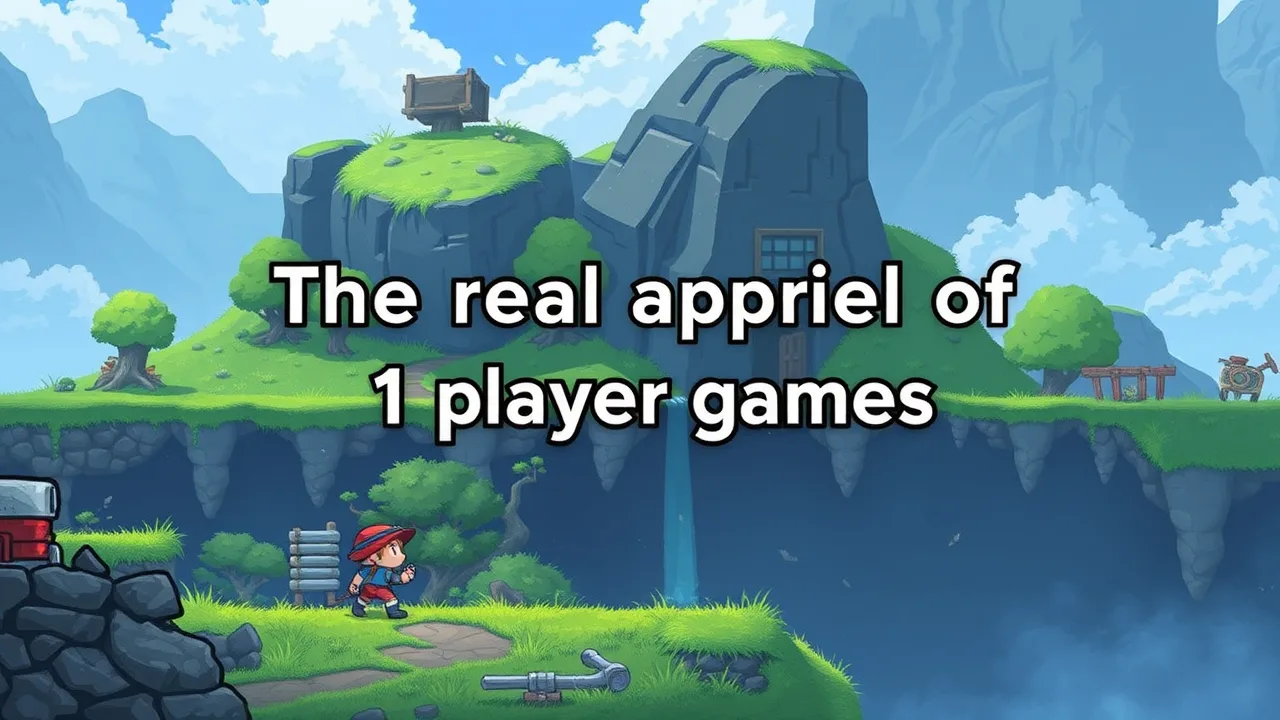
There is a reason people keep returning to single-player sessions after a long day. You get a tight feedback loop, fast progress, and zero teammate drama. You control the pace, you own the wins, and you pause whenever life calls. If you are craving quick focus without the chaos, 1 player games deliver. Skill expression feels sharper because every mistake and every clutch moment is on you, and that ownership quietly builds confidence. Pair that with modern browser tech and you get instant play without the setup tax of big downloads.
The real appeal of 1 player games 🎯
When you play alone, flow state comes easier. No voice chat noise, no meta churn, no lobby tilting your mood. Designers tailor encounters to one brain, which means the curve can be tuned to teach you smoothly. Puzzles teach patterns, platformers sculpt timing, roguelites iterate your decision making. That careful curation encourages learning instead of blame. Another underrated perk is narrative focus. Story beats land harder when you sit with them for a minute, not while ten notifications ping and a squadmate speed-skips every cutscene. You remember the room layout, the texture of a boss tell, the tiny victory that would vanish in a chaotic lobby. Solo runs leave cleaner mental footprints.
What counts as single player in 2025? 🧭
The category is wider than you think. Classic adventures, tactics, platformers, city builders, card roguelikes, idle-management hybrids, and physics toys all live here. Many modern releases include “optional” online features like leaderboards or cloud saves, but the core loop stays local. In browsers especially, devs lean into snackable sessions with real mechanical depth. That means you can push a level or two during a coffee break and still feel progress. When that loop respects your time, you come back without resentment and your engagement metrics soar.
How to build a daily ritual around 1 player games ⏱️
Ritual beats motivation. Set a simple window, say fifteen minutes after lunch or late evening. Pick one or two titles and stick to them for a week. Keep a tiny note with a next-run goal like “reach World 4 with three hearts” or “unlock the blue route.” End sessions on an easy win so you want to return. If you can, sit in the same chair, keep the same input device, and mute stray tabs. The brain starts linking that micro-environment to focused play, which nudges you back into flow faster.
Genres that absolutely cook in solo 🌟
Platformers: Crisp inputs, readable hitboxes, and level design that teaches without text. You learn by doing.
Roguelites: Short, consequential runs build mastery through repetition. Perks stack, knowledge stacks harder.
Puzzles: Perfect for short sessions. The satisfaction spike after a stuck moment is real.
Tactics: Turn-based pacing lets you plan two turns ahead, then enjoy the payoff without pressure.
Builders and management: Slow burn satisfaction. Systems mesh, towns hum, and progress tracks cleanly.
Action RPGs: Tight loot loops and boss patterns with upgrade paths you fully control.
Input, comfort, and accessibility 🛠️
Treat your setup like a tiny studio. If a title supports both keyboard and controller, test each for ten minutes. Many platformers map better to a d-pad or analog stick, while precise puzzle clicks favor a mouse. Bump text size if the game allows it. Cap your browser zoom at whatever keeps UI readable without clipping. If a game has colorblind aids or contrast toggles, use them. Better readability means better retention, which quietly helps your SEO metrics because users bounce less.
Performance tips for browser play ⚡
Close heavy tabs, especially streaming dashboards and dev tools. Hardware acceleration should be enabled in the browser settings. If you are on a laptop, plug in. Browser frame pacing is cleaner on wall power. Keep your drivers modern and your extensions light. Ad blockers and script managers can help page load speed, but whitelist titles you trust so they can run required assets. If you are embedding games, serve them over HTTPS with proper caching headers and compressed assets. The smoother the delivery, the more likely users settle in for multiple levels.
Curation that respects player time 🧭
Players want zero-friction discovery. They skim, they click, they commit if the first thirty seconds sing. Build tag pages that surface difficulty, average session length, and input type. Feature a “warm-up” row for low-stress entries, then a “challenge” row for high mastery. Pin a rotating “new this week” slot to keep return visitors curious. If a level editor exists, show one screenshot of a player-made stage. Social proof works even without online co-op.
Smart progression design for longevity 🧪
When you embed or feature titles, call out the progression spine in one sentence. Does the power curve come from items, permanent unlocks, or pure skill? Newcomers stick when they understand how victories scale. For difficult games, celebrate first milestones like “beat World 2” or “perfect a time trial.” List two or three micro-goals in your description that feel friendly, not sweaty. Gentle guidance reduces early churn.
Onboarding that actually helps 🧯
Users bounce the moment instructions get confusing. Put controls above the fold. If the game supports remapping, say so. Offer one tip that reduces early deaths, not five. For a tactics title, that might be “end turns in cover and bait enemy pathing.” For a platformer, “look for the tell before the second jump.” Small, immediately useful advice generates trust, and trust keeps scroll depth high.
Bring the library to the player 🧰
Your internal linking should behave like a tour guide who knows your taste after two picks. If a user likes precision platformers, the next surface card should not be a ten-minute idle toy. Use tiny badges like “short runs,” “controller friendly,” or “no text” to match energy levels. Add a “return where you left off” cue on revisits when possible. Little quality-of-life details make the site feel alive.
Finding the good stuff, quickly 🔎
Discovery should feel like a fun browse, not a chore. That is where a clean tag page helps. Point players to a living collection that gets updates and clear categories. If you want the practical move, send them where the curation is already done and the layout is quick to scan. Browse and bookmark 1 player games at this curated tag page on CrazyGamesX. Keep the copy tight, keep the thumbnails honest, and do not bury controls under a modal.
Why classic DNA still works today 🧬
Most modern single-player design sits on the shoulders of older hits. Early consoles and arcades set patterns that still inform pacing, checkpoint placement, and fail-forward loops. If you want a quick refresher on how we got here, the article on single-player video games outlines the lineage from coin-ops to contemporary design. Arcade classics and early consoles set the rules that still make 1 player games satisfying. Old constraints forced clarity, which modern devs keep because clarity converts curious players into regulars.
Monetization that does not wreck the vibe 💸
Keep ads predictable. Avoid layouts that shift buttons after load. If you run rewarded ads, clearly label reward size and cooldown. Respect volume defaults and remember that surprise audio is a rage quit generator. Place your offers at natural breaks like level completion, not mid-jump. Players forgive fair monetization when the session feels respected.
Community without chaos 🏡
Even if the loop is solo, community boosts retention. A short comment area with civility tools gives players a place to drop tips. Rotate a weekly prompt like “best route for World 3” or “show us your fastest run.” Feature one top comment for the week to reward helpfulness. Keep moderation firm and quick. Players notice when spaces feel safe and interesting.
Build for creators too 🎥
Short clips move traffic. Add a one-line “record tip” for each featured title, like “set browser to 60 FPS and crop to 16:9 before level 2 begins.” Offer a thumbnail kit with a clean logo crop and a readable font. Make it frictionless to share. Creator-friendly surfaces pull a second audience to the same game, which lifts time on page and session count.
Skill ladders that do not gatekeep 🪜
Design or curate games that offer layered mastery. First run, beat the stage. Second run, grab optional tokens. Third run, speedrun with clean inputs. This ladder keeps new players comfy while giving veterans an Everest to climb. When you write descriptions, point to the next rung in a friendly tone. People want to feel invited, not judged.
FAQ ❓
What are the benefits of 1 player games compared to multiplayer?
You get a stable difficulty curve and consistent pacing. No waiting for queues or lobbies. The loop rewards focused practice and you can stop anytime without letting anyone down. That control lowers friction and makes regular play more likely.
How long should a solo session be to feel satisfying?
Fifteen to thirty minutes is a sweet spot for browsers. Enough to clear a chapter, practice a boss, or solve two puzzles. Short sessions stack into real progress over a week.
Can I improve fast without grinding all night?
Yes. Use micro-goals. Learn one mechanic per day, like dash timing or enemy pathing. Record one run per week to spot habits. Small adjustments compound quickly.
Are there genres that beginners should try first?
Platformers with generous checkpoints, puzzle games with hints, and turn-based tactics with clear tooltips are beginner friendly. They teach mechanics gently and let you retry without pain.
Do I need a controller for browser titles?
Not always. Many games play great on keyboard and mouse. If a game supports controllers, test it. Comfort beats loyalty to any device.
Can I speedrun many 1 player games or are they not built for that?
You can. Developers often design clean level boundaries and predictable spawns, which is perfect for routing. Learn one segment at a time, then string them together. Reset often, keep notes, and celebrate small PBs.
What is the best way to discover fresh releases without drowning in options?
Use a curated tag page with clear thumbnails and short descriptions. Feature a “new this week” lane and rotate it on a schedule. That way, returning visitors always have a starting point and do not bounce in choice paralysis.