 CrazyGamesX.com
jelly run 2048 The Ultimate 2025 Players Guide
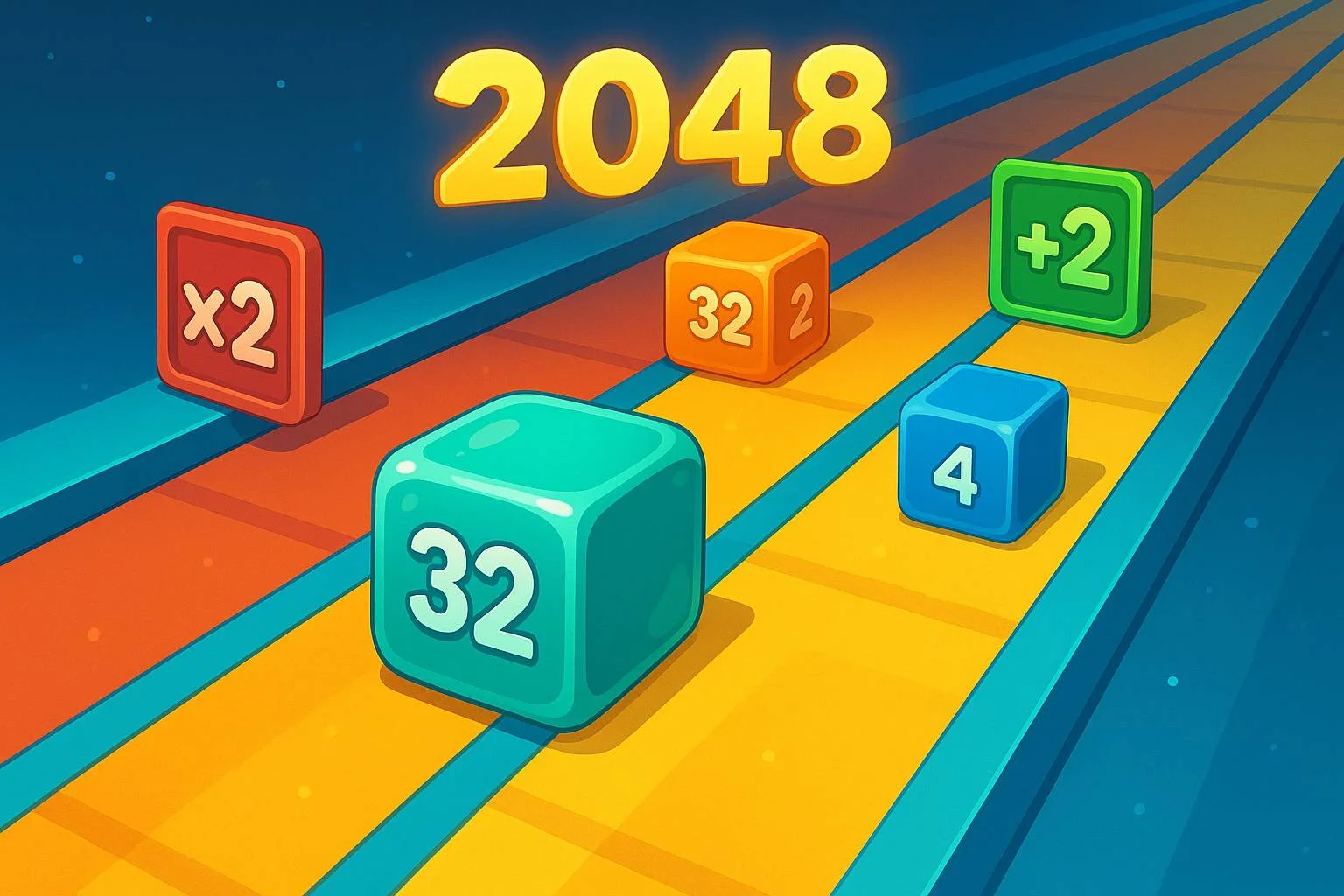
A wobbly cube, a fast track, and that irresistible “merge to double” loop jelly run 2048 turns quick swipes into smart, satisfying decisions. It blends the zen of number-merging with the rush of an endless runner: you steer a jelly block, collide with equal numbers to double your value, dodge hazards, and chase that sweet 2048 (and beyond). This guide shows you how to master paths, read gates, plan merges, and keep streaks alive so your scores climb every run.
Quick Overview: What is jelly run 2048 (and why it’s so sticky)?
Think runner + 2048. Levels (or an endless lane) scroll toward you. Each tile, gate, or cube you hit changes your value:
-
Merge with the same number → you double (2→4→8→16…→2048).
-
Math gates (+, ×, −, ÷) → modify your value.
-
Hazards (spikes, saws, pits) → reduce or end your run.
-
Boosts (ramps, magnets, coin lanes) → speed you up or feed you resources.
The hook: you’re always one perfect choice away from a huge multiplier and one sloppy collision away from reset. With just taps or arrow keys, jelly run 2048 delivers the “one more try” loop better than most mobile and browser games.
Crazy Flip 3D 2025 – Parkour, Flips & Flow
Find your flow with precise jumps, aerial rotations, and clean landings in Crazy Flip 3D—no downloads, just play in your browser. Learn to read platform spacing, manage momentum, and adjust spin midair to avoid crashes. Perfect for beginners and score-chasers alike. For deeper tactics, camera tips, and mistake recovery, check the Ultimate 2025 tutorial: https://www.crazygamesx.com/blog/crazy-flip-3d-master-every-move-in-2025. Sharpen rhythm, chain combos, and post your best runs.
Core Mechanics You’ll Use Every Run
1) Lane selection & look-ahead
The track usually offers three lanes (sometimes more). Your job is to read the next 2–3 tiles, choose the best arithmetic path, and align for merges that keep your value doubling cleanly.
2) Merge logic
Only equal numbers merge. If you’re 64, you want another 64 (not 32 or 128). Good tracks set you up with sequences like 64 → 64 → ×2 gate → 128 merge, compounding quickly.
3) Gate math
-
×2 / ×3 gates are king if you can still land an equal merge afterward.
-
+N gates are safer when your next equal tile is just above your current value.
-
−N / ÷2 gates are usually bad unless they let you match a high-value merge immediately after.
Rule of thumb: gates that preserve parity (staying on a power-of-two) keep merge routes alive.
4) Momentum & drift
Speed ramps add urgency. Learn the lane-change timing so you don’t overshoot a perfect merge. Drifting one lane too far is the #1 way to kill a chain.
Best Settings & Play Comfort ⚙️
-
Sensitivity: On desktop, use low-to-medium A/D or arrow responsiveness; on touch, aim for short, deliberate swipes.
-
Audio: Keep effects audible merges and gate hits give feedback on timing.
-
Brightness: Raise it slightly to read gate symbols early.
-
FPS stability: Close extra tabs/apps. Stutter breaks lane precision and ruins merges.
The 3-Phase Improvement Plan
Phase A Consistency (10 minutes)
-
Avoid fancy gates. Prioritize equal merges only.
-
Maintain a steady lane rhythm; limit yourself to one lane change per second.
-
Target 512 reliably before chasing 2048.
Phase B Arithmetic Routing (15 minutes)
-
Start evaluating two rows ahead: “If I ×2, I become 128, which sets me up for the 128 merge on lane 3.”
-
Prefer gates that keep you on a power of two that’s your merge pipeline.
-
Practice “skip discipline”: ignore tempting coins if they break the merge plan.
Phase C High-Risk, High-Reward (15 minutes)
-
Add ×3 gates and diagonal merges at speed.
-
Use a risk budget: two aggressive plays per run (e.g., last-second lane cut to catch a 512). Spend only when your route confirms a follow-up merge.
Strategy Deep-Dive: How to Choose the Best Path in jelly run 2048
1) The “Power-of-Two Spine”
Imagine your value as a spine: 32→64→128→256→512→1024→2048. Any gate that breaks this chain (e.g., +3 to 67) should be avoided unless it immediately leads to a correction (−3 or ÷… then equal merge). Staying on 2ⁿ values guarantees maximum merge opportunities.
2) Gate Triage (ranked)
-
×2 → immediate equal merge (S-tier)
-
Equal merge → ×2 (S-tier)
-
+N → equal merge (A-tier)
-
×3 only if a follow-up merge exists (A-/B-tier depending on layout)
-
−N / ÷2 only to fix parity (C-tier rescue tools)
3) The “Two-Step Proof”
Before you switch lanes, ask:
-
Step 1: After this gate, do I land on a clean power of two?
-
Step 2: Is there an equal tile immediately afterward?
If both are “yes,” take it. If not, hold your lane.
4) Cornering at Speed
When the track narrows, move early. Commit one lane change before the ramp so you’re already lined up for the post-ramp merge.
Common Mistakes (and instant fixes)
-
Chasing coins over merges → Coins are gravy; merges are the meal.
-
Over-steering on ramps → Move before the ramp, not on it.
-
Taking +N that breaks 2ⁿ → Only if a parity-fix gate or equal tile is next.
-
Last-second zigzags → Make one planned move, not three panic moves.
-
Ignoring the “two-step proof” → Always check gate then follow-up.
-
Letting hazards bait you → A safe merge beats a risky shortcut.
-
Glued camera → Scan lanes; tunnel vision misses clearer routes.
-
Tilt after a blown 1024 → Hard-reset your tempo with three “safe merges” in a row.
Score & Multiplier Systems (how to snowball)
Most versions of jelly run 2048 reward:
-
Streak merges (consecutive equal merges build a multiplier).
-
Bigger final value (finishing as 1024 or 2048 multiplies your base score).
-
Clean run bonuses (no crashes, hazard grazes, or missed gates).
Priority: keep the merge streak alive even if that means skipping a coin lane or a risky ×3. A reset to 0 multiplier hurts far more than skipping minor bonuses.
Level Archetypes & How to Beat Them
Straight Lanes, Dense Gates
-
Plan two rows ahead; stay centered until a gate proves itself.
-
Early ×2 into equal merge sets the tone for the rest of the track.
Narrow Ramps & Speed Boosts
-
Pre-align; don’t lane-change on the boost.
-
After ramps, re-center to regain merge options.
Hazard Gauntlets (saws/spikes)
-
Keep a safe buffer. Take a harmless +2 instead of threading through two hazards to reach ×2.
-
If you must pass between hazards, go in earlier and hold lane.
“Math Maze” (many small gates)
-
Use the power-of-two spine filter to ignore gates that break parity.
-
Look for +N that lands you exactly on the next power of two.
Practice Drills You’ll Actually Do
-
Parity Perfect: Start at 32 and reach 512 without leaving powers of two.
-
Two-Row Proofs: Pause mentally before each gate and call your Two-Step Proof out loud.
-
Ramp Rhythm: Run a speed track focusing only on pre-alignment before ramps.
-
Fix-and-Merge: Intentionally break parity once, then recover to a clean merge in the next two tiles.
Advanced Plays for High Scores
-
Setup Sacrifice: Take a small, safe +N now to unlock a ×2 → equal merge sequence two tiles later.
-
Diagonal Merge Catch: From center lane, pre-move half a lane so your drift carries you through the merge tile even at high speed.
-
Chain Banking: If you’re one tile short of a big merge, avoid any gate that changes parity bank the chain until the track hands you the equal tile.
Creator & Streamer Ideas 🎬
jelly run 2048 makes great short-form clips:
-
“From 32 to 2048 in 40 seconds”
-
“Why this +2 is smarter than ×3 (Two-Step Proof explained)”
-
“Ramp disasters vs. ramp perfection (split-screen)”
On overlays, show your current value, next two tiles, and a small lane cam so viewers see your pre-moves.
Play Now
Ready to put the plan into action? Start a run of jelly run 2048 and practice the Two-Step Proof until your merges feel automatic.
30 Rapid-Fire Tips (copy/paste checklist)
-
Stay on 2ⁿ values whenever possible.
-
×2 into equal merge > everything.
-
Use the Two-Step Proof before any gate.
-
Pre-align before ramps.
-
Skip coins if they break merges.
-
Center lane by default; adjust only with a reason.
-
Watch two rows ahead.
-
Rescue parity with −N/÷2 only if it unlocks a merge next tile.
-
Don’t zigzag; one decisive move beats three small ones.
-
Keep effects louder than music for merge feedback.
-
If FPS dips, lower effects for stable timing.
-
Train diagonal catches at medium speed first.
-
After a miss, do three safe merges to reset rhythm.
-
Coins are bonus; merges are score.
-
Prefer +N that lands you exactly on the next power of two.
-
Map quick keys/sweets spots for lane change timing.
-
On narrow bridges, enter early and hold.
-
Turn off mouse acceleration (desktop).
-
Touch: use the thumb pad, not the tip.
-
Count a merge cadence: “see → plan → move.”
-
Re-center after every ramp.
-
Record one run; tag every bad gate choice.
-
Learn where hazards spawn after ramps.
-
Keep a two-move plan at all times.
-
Spend risk only twice per run.
-
Don’t let a +N push you off parity unless there’s an immediate fix.
-
Commit late indecision causes most crashes.
-
Celebrate the 1024 merge; don’t force 2048 in a bad layout.
-
Finish sessions on a successful chain to anchor muscle memory.
-
Have fun calm hands make clean merges.
FAQ Detailed Q&A about jelly run 2048
1) What is jelly run 2048 in one sentence?
A fast lane-runner where you steer a jelly block, merge equal numbers to double your value, and use smart gate math to reach 2048 and beyond.
2) Is it beginner-friendly?
Totally. In the first minute you’ll learn lane swaps and merges. Focus on equal numbers and ignore tricky gates until you’re reliably hitting 256–512.
3) How do I reach 2048 more consistently?
Stick to the power-of-two spine and prioritize ×2 → equal merge sequences. Use the Two-Step Proof so every gate leads to a follow-up merge.
4) When should I take +N gates?
When +N lands you exactly on the next power of two and there’s an equal tile ahead. Otherwise, skip it to preserve parity.
5) Are ×3 gates good or a trap?
They’re great only if you can still hit an equal merge right after. If ×3 breaks your parity with no fix ahead, it’s a trap.
6) I keep crashing after ramps what’s wrong?
You’re lane-changing during the boost. Pre-align before the ramp and hold your lane until you re-center afterward.
7) What matters more: coins or merges?
Merges. Coins are secondary; the multiplier from streak merges dwarfs coin value over a full run.
8) How can I recover after breaking parity?
Use a small −N or ÷2 only if it’s immediately followed by a clean equal merge. Otherwise, hold lane and wait for a natural correction.
9) Any quick drill to improve fast?
Yes: Parity Perfect go from 32 to 512 without leaving powers of two. This cements your instinct for good gates.
10) What’s a realistic progress path?
Day 1: stable 256–512.
Days 2–3: regular 1024s using Two-Step Proof.
By Week 1: frequent 2048s, with smart risk on ×3 routes.
11) Does device choice matter?
Play what’s comfortable. Touch offers great flick control; desktop offers crisp timing. Prioritize stable FPS and clear visuals over everything else.
12) How do I stop tilting after a blown 1024 merge?
Run three safe, low-risk merges to rebuild rhythm, then re-enter aggressive routes with a fresh risk budget.
Final Word
jelly run 2048 rewards calm planning and decisive moves. Keep your value on the power-of-two spine, use the Two-Step Proof to vet every gate, and pre-align before ramps so merges stay effortless at speed. Do that, and 2048 stops being a rare miracle and starts feeling like your baseline freeing you to chase cleaner chains, bigger multipliers, and highlight-worthy finishes.