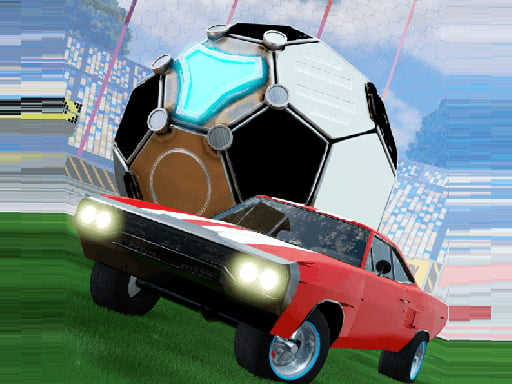
You want car-soccer that actually moves like a racer, hits like a derby, and scores like a proper striker. That’s rocketsoccerderby in a nutshell. It blends quick boost bursts, chunky ball physics, and a short match loop so tight you’ll promise yourself one more game and then suddenly it’s 3 a.m. If you just want to boot it up right now, here’s the exact spot: Play Rocket Soccer Derby. On that page you can jump straight into a browser session and feel out the handling without a download. Most listings describe it as car meets football on a big pitch with simple match goals and immediate pick up and play.
If you’ve ever watched highlight clips from the arena classic Rocket League, you already get the DNA. Same core idea of scoring with cars, but with its own physics flavor and upgrade economy. If you want the broad cultural context for why car soccer works so well, skim the entry for Rocket League and then come back here to dial in techniques.
Matches are simple to read. You’re in a rocket-boosted car on a football pitch. You accelerate, jump, and boost into a giant ball, trying to bury it between the posts while the other side tries to shut you down. You can go quick match for instant action or hop into league style progress that pays out currency and lets you move through tiers. That quick match versus league split shows up in multiple storefront and portal blurbs, and it’s exactly why the game is easy to teach but sticky to master.
On mobile, the same loop survives. Android and iOS builds highlight online multiplayer and offline single player, with the familiar promise of demolition-derby energy, nitro boosts, and car physics that actually push your positioning choices to matter. If you want to grind on the go, those versions exist and are free to download.
Out of the box, PC plays best with classic bindings:
WASD to drive
Left Shift for nitro boost
Space to jump
F to toggle camera lock or switch viewpoints
These bindings, plus the advice to slow before contact and to re-center your approach instead of panic boosting, are consistent across community guides and explain a lot of early whiffs. If you’re on mobile, the on-screen equivalents map cleanly and you can still do fast cutbacks and jump hits once you get the rhythm.
A quick word on camera. Free camera helps you line up diagonals and must-turn saves. Ball cam is better for sustained pressure in the box. Toggling between them is a legit skill. Expect to switch multiple times in one sequence: free cam while rotating, ball cam as you enter challenge distance, back to free cam for the recovery.
There’s a reason people sink hours. The physics are readable. You can bank passes off side walls and get predictable rebound angles. The league ladder gives you a reason to win two in a row. And upgrades change the feel just enough to matter without turning it into a spreadsheet. Portals and catalogs regularly call out things like car customization, damage and deformation, season or league modes, and a light achievement layer. That tiny stack of progression hooks keeps your brain chasing one more improvement.
When your schedule is tight, that quick game option matters. You can knock out a two-goal win between tasks, or you can settle in for a session and climb a tier. Multiple platform blurbs emphasize the pick up and play, which checks out once you feel how easy it is to read the ball’s path after just a few minutes.
1) Kill speed before contact.
Most new players carry too much momentum into the ball. Brake a touch earlier, then feather boost through the strike. Community primers literally name this as the number one beginner fix because slower approach equals cleaner conversion.
2) Half-flip into shape.
If you over-rotate, tap jump and roll to reset your nose toward play. A sloppy half-flip costs less time than a full loop and saves goals.
3) Attack with the bumper, not the roof.
Roof hits pop the ball straight up. Bumper hits transfer speed forward. Think of your car as a mallet. Angle the mallet face.
4) First touch is king.
On the opening kickoff, cheat slightly off center and aim for a soft deaden that leaves the ball in front of you. Then boost through second contact. Two touches beat one wild slap.
5) Wall reads > YOLO aerials.
Use walls to launch controlled rebounds toward net mouth. You’ll score cheap goals by passing to yourself off glass instead of missing airborne stabs.
6) Goalie patience.
If they’re charging the box, do not pre-jump. Reverse, face them, and meet the shot with a small hop and a short boost. Your job is to erase angle, not chase the ball at mid-field.
Most portals and community writeups describe a climb from beginner leagues up through tougher tiers, with currency and cogs rewarding wins that you then invest into your ride. That loop is simple and it works because it reinforces good habits instead of just cosmetics. Prioritize acceleration and boost efficiency first, then handling. Top speed is cool but meaningless if you can’t reposition after a 50-50.
Damage and deformation get called out in a few listings as well. While you are not running a long sim, the feedback of crunch and scrape teaches you spacing subconsciously. Every bump tells a story about angle, so pay attention to the sound of contact. It’s coaching you.
Hour 0 to 1
Free-play dribbles. Push the ball with light throttle only. No boost allowed yet.
Ten wall passes each side. Bank the ball halfway up the wall and meet it at the corner.
Jump timing drills. Stand still and pop the ball up with the bumper, then jump into a second touch.
Hour 1 to 3
Quick match spam. Forget the scoreboard and practice kickoff deadens.
One rule: no aerials above crossbar height. You’re building ground game first.
Day 2
Begin league runs. Play best-of-three blocks and take notes on when you give up goals. Usually it is over-commits.
Day 3
Start ceiling clears from your own goal. Drive up backboard, drop, and clear. You’ll stop so many back-post dunks.
Day 4 to 7
Add pressure patterns: corner trap, soft center pass, backboard read. Work one per day.
Watch one clip of your own misses and label the mistake: angle, speed, camera, or patience. That tiny post-match review saves hours of frustration.
You can play in a modern browser with zero install, and that is how a lot of people first touch it. Mobile builds on Android and iOS exist if you want to grind commute matches. Both app store pages emphasize online multiplayer plus offline single player, nitro boosts, and physics that ask for real inputs rather than floaty coin flips. Mobile is perfectly fine for progression, but desktop still rules for precise corner hits and back-wall clears.
If you discover school or work firewalls, many communities talk about unblocked mirrors and fullscreen wrappers. That tells you how popular it is on locked-down networks. Play responsibly and, more importantly, play better than your office rival.
Possession beats chaos. If you can keep the ball within one car length, you will create the better shot even against faster players.
Corners are checkmates. Roll the ball up side wall, meet it at the near-post angle, and send a mid-height strike that forces bad clear attempts.
Kickoff discipline. There are only a few opening patterns that consistently win. Pick one and stick with it for a whole session.
Boost is not gas. Treat boost as a limited resource for impact moments. You should spend more time coasting than you think.
Rotate like a triangle. Attack, shadow, back-post. Even in 1v1, your mental rotation is attack then recover to back-post before re-engaging.
Close heavy browser tabs and background streams. Stability trumps tiny graphics tweaks for read timing.
Use full screen. The extra vertical vision makes wall reads easier.
If your keyboard has mushy travel, consider a stiffer one. Tactile feedback reduces over-holding boost.
On trackpads, don’t. Plug a mouse. It’s not elitism, it’s geometry.
Every ugly own goal came from one of four roots: you chased through center when you should have rotated, you boosted at the wrong time, you trusted a bad angle, or you panicked in defense. Label the root, correct one habit at a time, and your MMR climbs. Also, celebrate boring wins. Boring wins mean you positioned well and killed their angles.
Control dribbler
Lives in the midfield, taps the ball repeatedly to maintain possession, punishes over-commits with a small cut inside.
Weakness: can get dunked by big aerials if they never clear their lines.
Demo enforcer
Prefers body checks and bump plays to open net mouth.
Weakness: over-commits and gifts counters. Use it as a mix up, not an identity.
Wall passer
Loves glass. Bank passes, mid-height shots, and backboard reads are the whole toolkit.
Weakness: can look silly when a clear rims out and the counter starts behind them.
You don’t need to hard lock one style. Build a kit of two and swap depending on opponent habits.
Strike through the center of mass. If you’re glancing the edge, your touch will roll wide.
Respect the first bounce. Never fully commit before seeing where the ball lands after a wall hit.
Learn a single save: mini jump at near post with a short boost. That one move will save half your goals conceded.
I keep missing the ball by a foot. You’re boosting too late. Start the boost one car length earlier so you are already at speed at contact.
My clears die at midfield. Angle problem. Nose down a hair and hit through the bottom third of the ball.
I lose every 50-50. You aim at the same contact point. Change height. Attack slightly above the ball to kill their forward speed.
I panic when the ball is in my box. Count a beat. Reverse, square up, tiny hop, tiny boost. You will get a clean block and a free clear.
Plenty of portals host car soccer, but this one balances immediate access with enough structure to keep your brain chasing improvements. Quick matches let you test tricks in a safe sandbox. League runs and car tweaks give you that one more loop. It is simple to teach and spicy to master, which is why it keeps showing up in browser arcades and mobile stores years after launch.
Spawn in, toggle ball cam on, and boost to center for a soft deaden. Tap the ball into a carry, then cut back toward the near post and roll it up the wall. As it drops, meet it with a bumper hit aimed at crossbar height. If blocked, rotate out to back-post and collect the clear. That tiny triangle is the foundation. Build from it.
The best part of rocketsoccerderby is that your improvements are visible. First you stop whiffing. Then you start shaping rebounds on purpose. Then you clock that you can force defenders into bad angles with one tiny touch and no extra speed. That glow-up never gets old, and the league rewards nudge you to keep at it.
You can get competent in an evening. You can get dangerous in a week. If you play ten minutes a day, focus each session on one micro skill: kickoff deaden, near-post save, wall pass, or first touch. Rotate skills daily and you’ll be shocked how fast your consistency jumps.
Is rocketsoccerderby free to play?
Yes. You can play in the browser for free, and the mobile builds on Android and iOS are free to download with optional purchases.
What are the default controls on PC?
Drive with WASD, boost with Left Shift, jump with Space, switch camera with F. On mobile, those map to on-screen buttons.
Does it have single player and multiplayer?
Store pages call out online multiplayer and offline single player support. That means you can practice alone or queue with others.
How do leagues work here?
You start at an entry tier, win matches to climb, and earn currency or cogs to upgrade your car. Prioritize acceleration and boost efficiency before pure top speed.
What platform should I use to learn?
Desktop browser remains the easiest for precise reads, but mobile is perfectly fine for grinding fundamentals on the go.
Is there car damage or customization?
Listings mention customization and a deformation feedback model. It’s not a deep sim, but the feedback helps spacing.